Buchla Easel (Modern)
Buchla Easel (Modern)
In stock
Description / Specs
Description / Specs
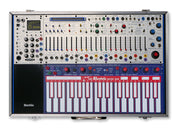
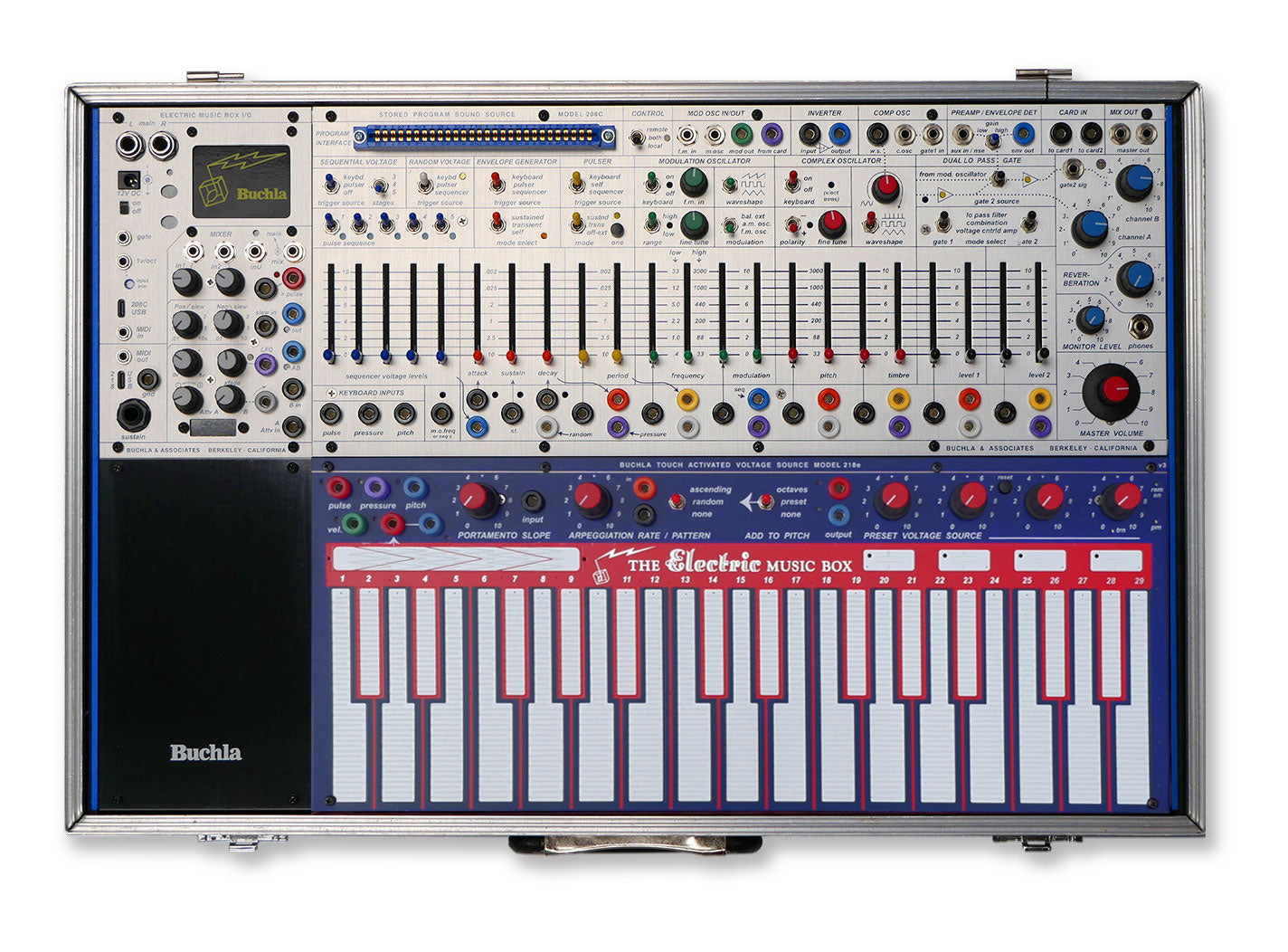
Buchla is thrilled to bring back the Music Easel for its third edition in 50 years. We first released the updated 208 Stored Program Sound Source, called the Easel Command, with expanded MIDI and USB capabilities. Next came the update of the Easel Program Manager – a complete kit for storing and recalling sound sources even faster than imagined in 1973. Our new 218 Touch Activated Voltage Source provides the ideal input interface, as originally envisioned. We can now combine everything in a rugged case with the advanced EMBIO module that unifies all audio and control inputs and outputs for integration with the rest of your musical setup.
Description
Stored Program Sound Source Model 208C
The sound source of the Music Easel is the 208C, which includes a complex oscillator and a modulation oscillator (which can also serve as an additional voice), each with independent switchable waveforms, as well as a noise generator, allowing for rich and intricate sound design. The 208C also features a five-stage sequencer, envelope generator, pulser, and modulation source – with switchable triggers – enabling complex patterns and evolving textures. The dual low pass gate provides dynamic control over the tone and amplitude of the sound, as well as natural-sounding decay and sustain. The 208C has several modulation sources, including a random voltage generator, the envelope generator, modulation oscillator, and an envelope detector. These sources can modulate various parameters via the extensive patch field – creating movement, texture, and complexity. The 208C also includes a mixer section with spring reverb.
Touch Activated Voltage Source Model 218e (v3)
The first design appeared in the 1973 release of the Buchla Music Easel and was named after the spacecraft that delivered astronauts to the moon. Providing the familiar piano key layout for this early mobile music machine, the additional controls and capabilities served as an interface for exploring uncharted musical territory. With the new version 3, it has been upgraded with a foundation of stable, modern electronics offering incredible sensitivity and accuracy – the lightest touch produces triggers and control voltages. The adjustable sensor has the dynamic range and durability to handle your playing. The new texture not only improves sensing but also provides a satisfying tactile experience. As always, pressure is an expressive output, adding an extra dimension to control. MIDI outputs velocity and polyphony, as well as channel pressure, making the 218e a uniquely expressive controller. The 218e includes portamento and an arpeggiator, which can be driven by external inputs and interact with automated notes to create more complex patterns. Additional controls allow you to blend different patterns and randomness to easily shift from the expected to the surprising. The classic preset voltage knobs offer several ways to shift your sounds into new territory. Not only can the knobs be used for quick access to voltages for your patch, but they can also control arpeggiation modes and octave shifting. Pads output pulses for additional control. The 218e also provides a unique interface for playing your existing MIDI gear and soft synths. Each touch outputs note name, channel pressure, and velocity for every note, along with sustain controls from a pedal. Polyphonic MIDI mode lets you play chords. The touchstrip can act as a pitch bend control or as a mod wheel for additional expressive control. Easily configured using the front panel controls, you can send notes and controls on any MIDI channel.
Electric Music Box Input/Output (EMBIO)
Maintaining the spirit, sound, and process of the original, the new Music Easel adds a variety of new features. Buchla’s latest versions of the Stored Program Sound Source and Touch Activated Voltage Source are connected with the Electric Music Box Input/Output (EMBIO) module. This provides MIDI out (mini jack and USB) and CV out from the 218, MIDI in to the 208, and audio out from the 208C. Additional creative control comes from the Audio Mixer, for integration with other Buchla modules and systems, and the CV conditioners and controls. The slew control can turn your sequencer into a wavy modulator or soften a square LFO. The attenuator and crossfader let you find new levels and combinations of voltages from existing ones. The pulse converter offers new rhythms to trigger. And a simple LFO provides another valuable modulator when you just can’t quite bring yourself to flip that Mod Osc switch from “high” to “low.”